Latest

News
Punitive student loans threaten the future of UK science
Science graduates face choice of leaving science sector for higher paid careers or becoming stuck in debt trap
Feature
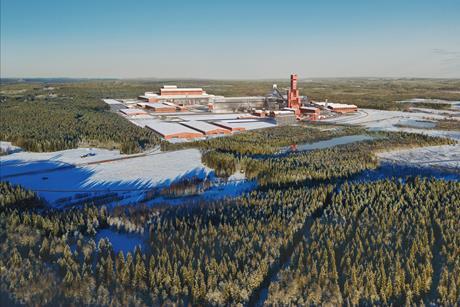
The race to decarbonise iron and steelmaking
Steel production accounts for up to 11% of global carbon dioxide emissions, yet it remains indispensable to modern life. A wave of new technologies to decarbonise steelmarking is emerging – but the economics remain daunting
Feature
The evolution of chemical notation
Chemical notation has come a long way since the cryptic symbols of the alchemists – but agreeing on how to represent molecules, bonds and reactions has never been straightforward, and the challenge is far from over
Opinion
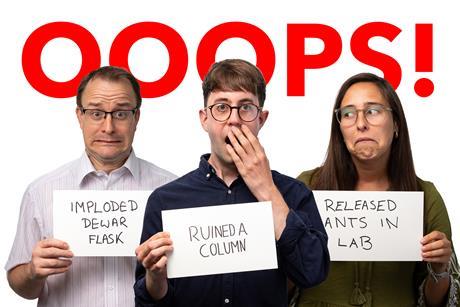
The Chemistry World team shares some of its low-stakes mistakes
Have you ever made a typo, broken some equipment or made a general slip-up? Get in touch and tell us about some of your own low-stakes mistakes.
Research
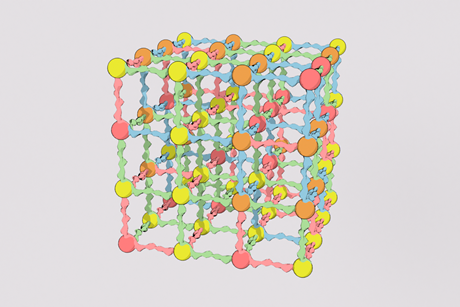
Multivariate MOFs make the case for embracing complexity
Frameworks built from multiple different metals and ligands are expanding the possibilities for materials that can do many things at once
Research
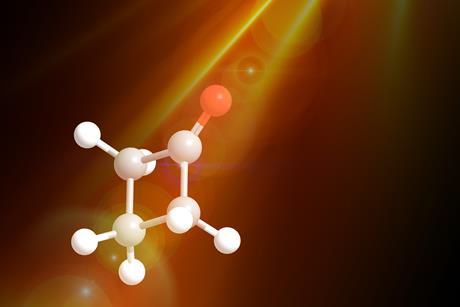
Can we predict what happens in a molecular movie?
A seemingly impossible challenge revealed how close theorists are to truly predicting the future in computational photochemistry
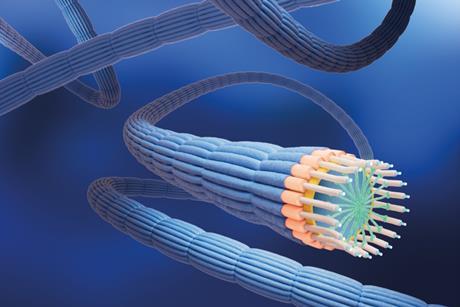
Bacteria discovered to be synthesising metal–organic frameworks with ‘extraordinary conductivity’
Biosynthesis of MOFs observed for the first time and could inspire the design of sustainable electronic structures
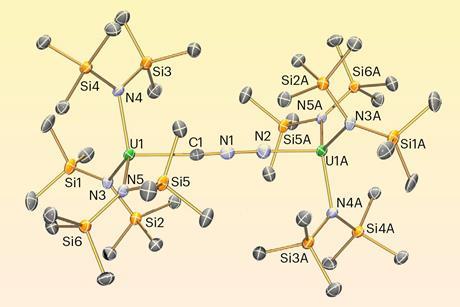
Metal carbyne finally synthesised using f-block element
Bonding in uranium–carbon triple bond differs to transition metal equivalents
Controlling variability in biosynthesis: the role of high-purity solvents and reagents
40 years of patent data reveals an overreliance on hazardous solvents
Two-in-one reagent combines fluoroalkylation with being click ready
Rare N2 dimer could let scientists answer questions about global nitrogen cycle
Femtosecond x-rays solve contentious question of how azobenzene flips between isomers
Microsoft’s split-personality retrosynthetic AI is a fast learner
Skeletal editing step forward as carbon atoms swapped for nitrogen by embracing unreactive radical intermediate
The race to decarbonise iron and steelmaking
Steel production accounts for up to 11% of global carbon dioxide emissions, yet it remains indispensable to modern life. A wave of new technologies to decarbonise steelmarking is emerging – but the economics remain daunting

US atrazine cancer lawsuit revives hazard vs risk debate in pesticide regulation
Should firms have to issue cancer warnings in states that use different assessment criteria to national regulators?
Covestro cuts polycarbonate production in Europe
Tyremakers are searching for alternatives to salmon-killing additive
Why innovation gets stifled if you've settled into the fur-lined rut
Strikes at GSK’s Belgian sites over plans to cut 1200 jobs
Syngenta plans to close Grangemouth manufacturing site
Merck & Co’s US antibiotic withdrawal sends the wrong signals for combating resistance
A Nobel for chiral catalysts’ helping hand

Questions about who to credit extend beyond the Nobel prize
Conceptual, epistemic and political factors all influence who is deemed to have made a scientific discovery

US atrazine cancer lawsuit revives hazard vs risk debate in pesticide regulation
Should firms have to issue cancer warnings in states that use different assessment criteria to national regulators?
Stop drawing lies: Why chemistry needs hypergraphs
Guillermo Restrepo reflects on the limitations of how we currently draw molecules and calls on chemists to adopt a system that better illustrates their complexity

Why innovation gets stifled if you've settled into the fur-lined rut
Progress involves assessing all processes for improvements – even those whose inefficiencies we’re comfortable with
What’s it like to be the first person privy to Nobel-worthy work?
As Philip Ball, handling editor of Kensō Soai’s 1995 paper reveals, sometimes you’re oblivious to it
Sanctions, regulation and prices restrict access to medicines
Having medicines available when we need them is a privilege, but access more globally is complex and relies on sometimes fragile supply systems.
Scientists must be trained to work without AI, as well as working with it
As AI and autonomous labs become more capable, human reasoning must be preserved
Susumu Kitagawa: ‘I tell my students three words: luck, stubbornness and perseverance’
The winner of the 2025 Nobel prize in chemistry on books, porous materials and his mantra for success

In conversation with Richmond Sarpong
Hear from the organic synthetic chemist rewriting the rules of molecular construction – join us 3 December
Where art meets chemistry: the science of communicating science
Join us on 4 November to explore how creativity can change the way we share science

El Agente: ask me anything! A live demonstration
Join us as we tackle your chemistry challenges live with the El Agente team on 24 November
Nobel prize in chemistry 2026: Reaction
Join us for an exclusive look at the science behind the Nobel prize in chemistry 2026

Waterproof white inspired by nature & low-stakes mistakes
How can structural colour provide an alternative for pigments, chemicals and their environmental cost? And the Chemistry World team discusses their low-stakes mistakes.

Nobel prize in chemistry 2026: predictions
We discuss our picks for this year’s chemistry Nobel prize. Plus, are there certain traits that make a Nobel laureate?

Drugging the ‘undruggable’ cancer proteins & conserving the Bayeux Tapestry
How did molecular glues help crack one of cancer’s toughest targets? And we explore the chemistry behind the investigation and conservation of the Bayeux Tapestry.
Advances in CAR-T cancer therapy & carbon materials’ hidden defects
What does recent success with bladder tumours mean for solid cancer treatment? And we discuss why scientists are rethinking how they assign peaks in spectra of carbon-based materials.
Opinion
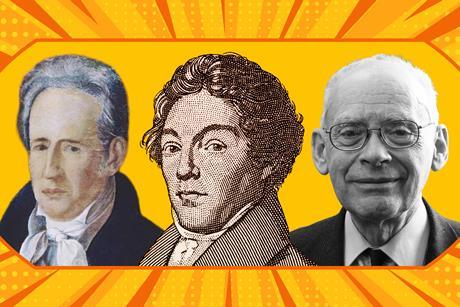
Questions about who to credit extend beyond the Nobel prize
Conceptual, epistemic and political factors all influence who is deemed to have made a scientific discovery
Careers
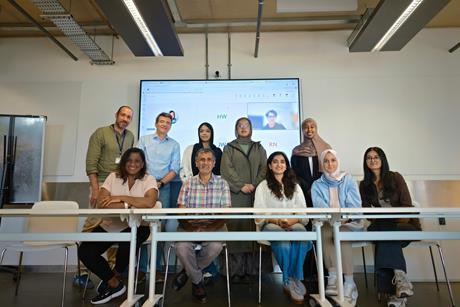
Highlighting the ‘missing elements’ in chemistry curricula
How staff and students from a trio of universities in London, UK are working together to produce resources that showcase minoritised chemists
Careers
How to diversify a chemistry department and curriculum
Tips to help a wider range of students feel like they belong in chemistry
News
Small World photo competition winner announced following disqualification of video winner for AI use
The organisers of the Nikon Small World in Motion contest have now honoured a new winner with its top prize of $3000
News
Green chemistry co-founder John Warner on tragedy, creativity and science
Warner shares how his passion for music transitioned into a love of chemistry and how life events have shaped his professional successes
Sponsored

Controlling variability in biosynthesis: the role of high-purity solvents and reagents
From oligonucleotides to mRNA, precise workflows leave little room for deviation

Scientists must be trained to work without AI, as well as working with it
As AI and autonomous labs become more capable, human reasoning must be preserved

The scientists who will power our future
Calling in the next generation of scientists from all backgrounds to address the energy crisis and build the next generation of batteries.

Advantages of monodisperse PEG in drug development
Precision matters: why monodisperse PEG is transforming drug development.

Karl Fischer titration for moisture analysis: applications in batteries, fuels and food
Accurate moisture analysis has consequences that extend well beyond the laboratory. Karl Fischer titration is what keeps them in check. The question is whether the reagent is up to the task.
Why data visualisation is so important in the age of AI
Machines don’t need to draw charts and plots to work with data, but humans will still need datavis skills to work with machines.

Pittcon 2026 heads to San Antonio for analytical chemistry showcase
The world’s largest laboratory science conference returns to San Antonio in March 2026, featuring Nobel laureate Frances Arnold as keynote speaker and showcasing cutting-edge analytical instrumentation across five days of technical sessions and networking events.

Biphenyl: 20 years of Restek innovation
How Restek’s Biphenyl column changed chromatography



Punitive student loans threaten the future of UK science
Science graduates face choice of leaving science sector for higher paid careers or becoming stuck in debt trap

Highlighting the ‘missing elements’ in chemistry curricula
How staff and students from a trio of universities in London, UK are working together to produce resources that showcase minoritised chemists

How to diversify a chemistry department and curriculum
Tips to help a wider range of students feel like they belong in chemistry

Green chemistry co-founder John Warner on tragedy, creativity and science
Warner shares how his passion for music transitioned into a love of chemistry and how life events have shaped his professional successes
In conversation with Richmond Sarpong
Why innovation gets stifled if you've settled into the fur-lined rut
The PhD to biotech series: Networking, hiring reality and making the transition stick
Waterproof white inspired by nature & low-stakes mistakes
The PhD to biotech series: Translating an academic profile into an industry narrative
How to make the most of tutorials