Materials – Page 47
-
 Research
Flocks of nanorobots could form artificial muscles
Hundreds of biomolecular robots can be programmed to swarm together to create shapes
-
 Research
Skin-mimic material is as tough as teeth
Self-healing material combines best of skin’s properties
-

-

-
 Research
Atom thin mirrors’ reflectivity can be turned on and off
Molybdenum diselenide layer mirrors could have optoelectronic applications
-
 News
NewsChemicals strategy to lay out UK government aspirations after Brexit
Twenty-five year environment plan short on details
-
 Feature
Chemistry beyond Moore's Law
Can anything replace the silicon in our mobile phones and laptops? The hunt is on, reports Hayley Bennett
-
 Research
Unpicking a unique molecular network
Computational modelling informs self-assembly solution
-
 Research
From cement to batteries with help from a wombat
Vanessa Peterson is in the fast lane when it comes to relating atomic-scale structures to a material’s function
-
 Opinion
A question of reproducibility
Survey of metal–organic frameworks raises concerns about the reliability of adsorption data
-
 Research
First doubly holey MOF holds catalysis promise
Macroporous particles made out of microporous material could catalyse reactions between bulky molecules
-
 Research
Indigo genes dyeing to make jeans cleaner and greener
Denim dye could become more environmentally friendly with some clever chemistry
-
Article
2017 in review - Atoms, bonding, materials and synthesis
2017 in review – Atoms, bonding, materials and synthesis
-
 Research
MOF squeezes catalyst into shape for switching reactivity
Porous material switches on nucleophilic organocatalyst’s hidden electrophilic site
-
 Research
Graphene transformed into diamond under pressure
Effect unique to bilayer graphene could be exploited to make ultrathin protective coatings
-

-
 Research
Electric eels inspire stunning new hydrogel
Material modelled on ion channelling cells could one day power soft, implantable pacemakers or sensors
-
 Feature
Illuminating manuscript treasures
Rachel Brazil takes a look at the Fitzwilliam Museum’s illuminated manuscripts and learns their scientific stories
-
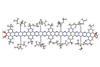 Research
Longest ever graphene nanoribbon made
Iterative synthesis makes nanoribbons that are nearly 8nm long
-
 Research
Can you feel the chemistry?
Humans can discriminate between different surface chemistries using their fingers