Molecular biology – Page 5
-
 Research
Teixobactin’s two pronged antibiotic attack mechanism revealed
Understanding of formation of deadly supramolecular structures could help build improved antimicrobials
-
 Research
Mystery of how plants make strychnine solved 75 years after characterisation
Three-quarters of a century after Robinson and Woodward cracked structure chemists unravel poison’s biosynthesis
-
 Research
Fossil molecules reveal dinosaurs’ bird-like metabolism
Thioethers preserved in bones show that most dinosaurs were warm-blooded, though T rex may have been particularly sluggish
-
 News
NewsChemistry Nobel laureate Sidney Altman dies at 82
Canadian–American molecular biologist won the 1989 prize for discovering RNA’s catalytic ability
-
 Article
Causal emergence might explain how living systems can operate
Life does not run like clockwork
-
 Feature
Sequencing one cell at a time
New advances that allow scientists to uncover the molecular differences between individual cells could revolutionise medicine, Ian le Guillou finds
-
 Research
Biochemical secrets of tarantula’s painful bite could point to perfect painkillers
King baboon spider venom could help scientists develop potent analgesics
-
 Research
New microscope makes tracking chiral molecules in live cells possible
The instrument uses circularly polarised light to tell left- and right-handed species apart and monitor them in space and time
-
 Research
Left-handed nanoparticles are far better vaccine adjuvants than their mirror images
Chiral gold nanoparticles shown for the first time to elicit differing immune responses in cells and live mice
-
 Research
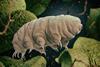
Gel-forming proteins could help tardigrades survive extreme conditions
Biophysical dissection of tardigrade’s disordered protein could uncover how microscopic animals survive conditions that kill most other forms of life
-
 Research
Individual proteins identified with world’s tiniest ruler
Nanosized caliper that can identify individual proteins could ‘do for proteins what next-generation sequencing did for DNA’
-
 Research
Possible dinosaur DNA discovered in 125-million-year-old fossil
But that doesn’t mean we can clone extinct species Jurassic Park-style
-
 Research
Exploiting evolution to explore chemical space shows promise for drug discovery
Using molecular trees – similar to family trees – chemists could predict how products will evolve to make new molecules
-
 Research
DNA robot controls live cells’ movement
Molecular machine walks across cell membrane to activate cellular migration
-
 Business
Brewing up plant-inspired medicines
Antheia reconstructs complex biochemical pathways in yeasts to speed up production of natural product-based drugs
-
 Research
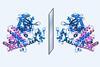
Mirror image enzyme constructs longest ever mirror DNA strand
Since chirally inverted DNA is more stable than its natural counterpart, it can be used to encode secret messages
-
 News
NewsMachine learning delivers ‘human genome’ moment for proteins
Protein structure prediction tools AlphaFold and RoseTTAFold take the latest steps towards maturity and make their software open source
-
 Research
Enigmatic DNA dubbed ‘Borgs’ discovered in methane-metabolising microbes
The large nucleic acid structures may help bacteria play a role in regulating global methane
-
 Research
Individual cell’s energy metabolism caught on camera for the first time
Combining machine learning with fluorescence imaging provides new insight in glycolysis and might help with development of new therapies for cancer
-
 Opinion
Opening up a cellular black box
Working out how biomolecular condensates work may reveal a lot about the success or failure of different drugs