
Mammalian cells actively produce elemental sulfur, using it as an antioxidant to limit cell damage. While bacteria, plants and fungi are known to produce the material, this is the first time it has been detected in mammals.
Many single celled organisms produce elemental sulfur, predominately in its most stable form as an eight-membered ring (S8). Some plants and fungi also use S8 in various reactions, harnessing the chemical’s ability to shuttle between different oxidation states. However, whether mammals also produce, store or use elemental sulfur was previously unknown, despite their cells containing a host of sulfur-containing compounds.
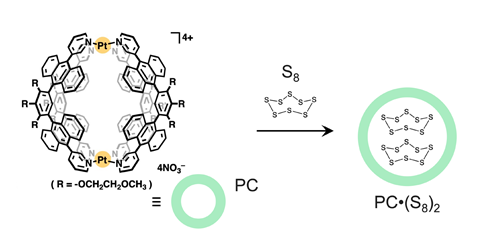
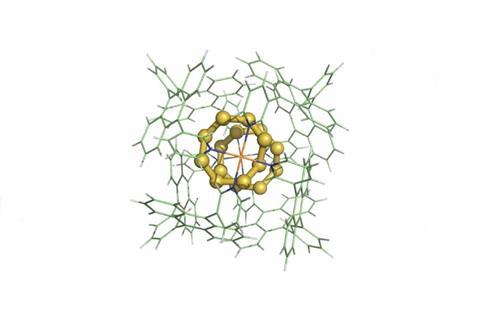
Now, an international team has detected S8 in cells from both mice and humans. The team, which was led by Uladzimir Barayeu from the Max Planck Institute for Polymer Research in Mainz, Germany and Takaaki Akaike from Tohoku University in Sendai, Japan, used a polyaromatic capsule to trap and stabilise S8 through hydrophobic interactions. This allowed them to use Raman microscopy and mass spectrometry to locate and quantify the abundance of elemental sulfur.
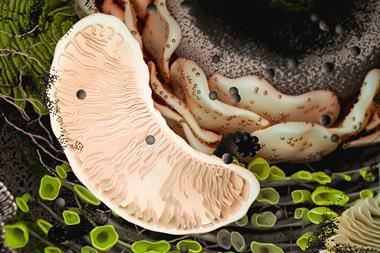
Mitochondria had high levels of S8, as did lipid droplets, where the compound is likely stored. The researchers suggest that extrapolating the concentrations detected across different tissues indicates that there could be tens of grams of elemental sulfur in a human body.
The team identified an enzymatic process that converts small polysulfides into longer sulfur chains through a series of reactions, before ultimately producing S8. This process happens in lipid droplets near mitochondria, which the researchers suggest is consistent with the theory that mitochondria originated from a sulfur-using proteobacteria that formed a relationship with a host cell several millions of years ago.
Experiments also showed that elemental sulfur reacts with thiol-containing compounds found in cells to produce antioxidants that limit the oxidation of lipids, which would otherwise cause cell damage and inflammation. Injecting elemental sulfur into the joints of mice that had osteoarthritis decreased lipid oxidation, with the team suggesting that this could act as a potential therapy for inflammation.
References
U Barayeu et al, Science, 2026, DOI: 10.1126/science.aec5473









No comments yet