Physical chemistry – Page 5
-
 Opinion
Celebrating 100 years of the Pauli exclusion principle
How a quantum view of electron states enabled us to understand the stability of matter
-
 Research
Simulations suggest why highly unsaturated molecules are so abundant in the interstellar medium
Shocks, cosmic rays and x-rays seem to ionise and fragment saturated molecules via mechanisms that result in structures with the highest possible number of π bonds
-
 Opinion
Robots queuing up to fail
Claims of an AI revolution in drug discovery are missing the biggest problem
-
 Research
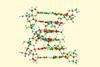
Computer simulation of carbonless DNA prompt researchers to consider alternative biochemistries
Researchers swap nitrogen and boron into DNA to create analogues that are geometrically and electrostatically equivalent to conventional DNA
-
 Research
Chemists use AI to uncover pigments used on Berlin Wall murals
Researchers hope work will help to preserve this art
-
 Research
GPT-based AI tool predicts inorganic crystal structures
CrystaLLM uses GPT to arrange atoms, turning text-based data into numerical tokens
-
 Opinion
Sydney Young and his evaporative fractionator
Developments in distillation find us in good spirits
-
 Whitepaper
Digital tools for deft materials development
Discover how Microsoft can help you turn years of lab work into days of computation
-
 Research
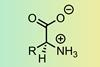
Incorrect pKa values have slipped into chemical databases and could distort drug design
Confusion in zwitterionic compounds leads to misrepresented data in widely used repositories such as ChEMBL
-
 Opinion
Letters: December 2024
Readers share concerns over classifying ethanol as reprotoxic, celebrate undergraduate practical innovation, and more
-
 Research
AI tool learns to build molecules fragment by fragment
Software tasked with designing a type-II kinase inhibitor suggests 97 candidates in 10 minutes, three of which were both synthesisable and effective at micromolar and nanomolar concentrations
-
 News
NewsSuperconductivity researcher at centre of misconduct scandal departs University of Rochester
Several of Ranga Dias’s papers have been retracted amid data manipulation allegations
-
 News
NewsAlphaFold developer says AI is just getting started in science
Chemistry Nobel laureate John Jumper says latest version of AlphaFold is making good progress on interactions between molecules and protein
-
 Research
Large language models are better than humans at answering chemistry questions
AI models outperform human chemists in every topic area. But are they really better chemists?
-
 News
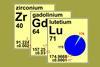
NewsGadolinium, lutetium and zirconium all have new atomic weights
Iupac updates of elements’ standard atomic weights follows new evaluations of abundance
-
 Opinion
Did AI just win the Nobel prizes in physics and chemistry?
The importance of the expert eye in scientific progress
-
 Opinion
A high-pressure insight into the structure of water
The hydrogen-bonded network in liquid water resists compression; density increases instead arise from molecules moving into voids
-
 News
NewsTwenty ways AI is advancing chemistry
List reveals how machine learning is already changing the central science
-
 Feature
How AI protein structure prediction and design won the Nobel prize
David Baker, Demis Hassabis and John Jumper won this year’s Nobel prize in chemistry. Jamie Durrani investigates the origins of a biochemistry revolution
-
 News
NewsProtein design and structure prediction wins chemistry Nobel prize
David Baker, Demis Hassabis and John Jumper were rewarded for creating computational tools to design proteins and predict their structures that have ‘revolutionised biological chemistry’