Quantum and theoretical chemistry – Page 5
-
 Research
Magnetic fields can have a huge impact on reactivity of ultracold molecules
Probability of a reaction occurring increases 100-fold and points to quantum control of chemistry
-
 Research
Swimming molecules come under intense scrutiny
Discoverers of enhanced diffusion in click cycloaddition reactions stand firm after other groups say they can’t reproduce the findings
-
 Research
New phenomenon ‘quantum friction’ explains water’s bizarre properties
Theory offers explanation why water behaves oddly when flowing through nanoscale carbon-based channels
-
 Research
Real space alternative for magnetic spin-coupling models
Model for magnetic coupling moves past the orbital picture and overcomes its limitations
-
 Research
Direct evidence emerges for the existence of two forms of liquid water
Low temperature experiments with sugary solution reveal transition from low- to high-density states at pressure
-
 Research
Listening to quantum beats could reveal rhythm of birds’ migratory compass
Laser technique to read out oscillating spin states could help uncover how animals’ magnetic sense works
-
 Research
Algorithm out of Google’s DeepMind finesses DFT calculations
Machine learning creates algorithm that avoids large errors in solutions to certain problems
-
 Research
Quantum double-slit experiment done with molecules for the first time
Researchers prepare ‘new type of matter’ to conduct classic wave–particle duality experiment
-
 Research
First vortex beam made entirely of atoms
Twisting atoms’ quantum mechanical wave function into a helix could reveal insights into atom–matter interactions
-
 Research
Transient quantum fluctuations tune polymer self-assembly
Chemists use to the universe’s random electromagnetic fluctuations to profoundly change a compound’s supramolecular organisation
-
 Research
Levitating glass bead closes in on quantum mechanics' fundamental limit
Two different methods track position and speed of an ultracold glass sphere with a precision that comes close to the limit set by Heisenberg’s uncertainty principle
-
 Feature
The search for the grand unification of aromaticity
Researchers have been trying to find a full definition of aromaticity for almost two centuries, and yet keep discovering new types
-
 Research
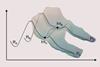
Chemists control reaction path with mechanical force
Mechanochemical mechanism exploited to access unconventional trajectories on a reaction’s potential energy surface
-
 Research
Experimental observations of bubbles containing multiple electrons
Bubbles in liquid helium containing multiple electrons could be used to develop quantum simulators
-
 Research
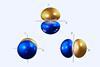
Origin of mysterious alpha effect in nucleophilic substitution reactions unveiled
Alpha nucleophiles’ ability to get close to electrophiles – rather than their intramolecular lone pair repulsion – gives them unusual reactivity
-
 Research
Bond between artificial and natural atom measured for the first time
Chemists reveal the tiny forces in chemical bonds between quantum corrals and AFM tip atoms
-
 Research
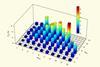
Reaction between ultracold molecules reveals limits of quantum statistics
Real-world molecules don’t always follow the quantum-statistical model
-
 Opinion
How values influence decisions in science
Empirical evidence is not always sufficient to determine the models we use
-
 Research
New definition of electronegativity fixes flaws left by Linus Pauling
Revised version of Pauling’s formula enables better predictions for problem systems such as metal-containing molecules
-
 Research
Subtle quantum phenomenon found to alter chemical reactivity for the first time
Peeking into the picosecond transition state window reveals effect of spin–orbital interactions